
Navigating the AI Job Market: Practical Guidance for HR Leaders and Job Seekers in Africa
Insight

Navigating the AI Job Market: Practical Guidance for HR Leaders and Job Seekers in Africa

Practical guidance for HR and job seekers on AI in Africa's job market 2026

Give this listing more visibilityFeature it for 7 days so it stands out in the collection. Feature listing $5

Ad Spot Availabe

LISTING OWNER

Unlock listing edit

Enter the edit PIN supplied when this listing was created.

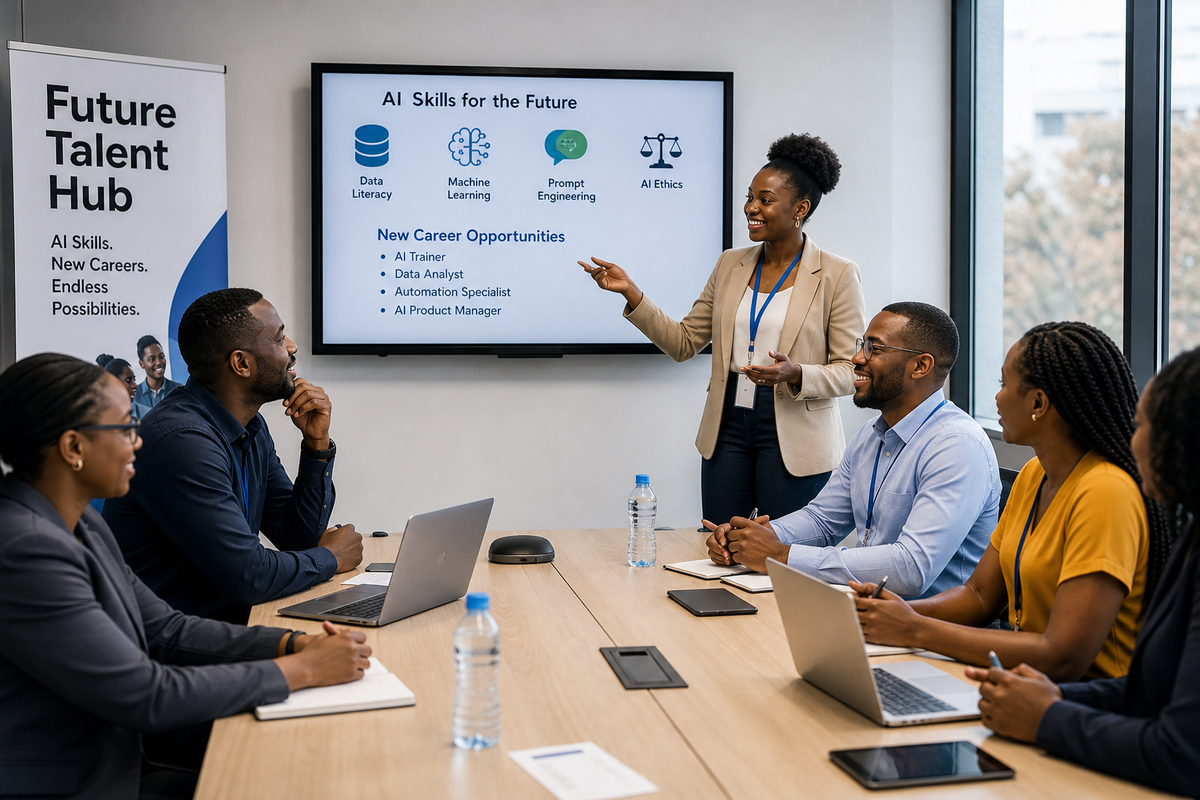
(h2)Navigating the AI Job Market: Practical Guidance for HR Leaders and Job Seekers in Africa(/h2) (b)Current Dynamics in AI Employment(/b) (ul)(li)As AI adoption accelerates across African industries, the job market is shifting toward roles that require both technical proficiency and human-centric skills like creativity, emotional intelligence, and ethical decision making.(/li)(li)Reports indicate that by 2030, up to 85 million jobs may be displaced globally by automation but 97 million new ones created, with Africa poised to capture a significant share in AI related fields if investment in education keeps pace.(/li)(li)Practical example: Nigerian fintech companies are hiring AI ethicists to ensure fair lending algorithms, a role that did not exist five years ago, offering salaries 40% above average tech positions.(/li)(li)Takeaway: HR departments should revise job descriptions to emphasize AI fluency across all levels, not just IT departments.(/li)(/ul) (b)Essential Skills for the Future Workforce(/b) (ul)(li)Mastery of AI tools including generative models for content creation, predictive analytics for business forecasting, and computer vision for quality control in manufacturing.(/li)(li)Understanding data governance and privacy laws specific to countries like Kenya's Data Protection Act and Nigeria's NDPR to avoid compliance pitfalls.(/li)(li)Soft skills amplified by AI: the ability to interpret AI outputs, challenge algorithmic biases, and lead teams in human-AI collaboration scenarios.(/li)(li)Example: In Rwanda, professionals trained in AI for public service have used predictive models to optimize resource allocation in agriculture, creating sustainable employment in rural areas.(/li)(li)For job seekers: Build a personal brand by publishing case studies on GitHub or local blogs demonstrating how you applied AI to solve real African challenges such as traffic management in Lagos or healthcare access in remote villages.(/li)(/ul) (b)HR Strategies for AI Integration(/b) (ul)(li)Develop comprehensive talent acquisition pipelines by partnering with universities and coding bootcamps focused on AI, offering apprenticeships that convert to full time roles.(/li)(li)Implement continuous learning cultures with dedicated budgets for AI certifications, measuring ROI through improved productivity and innovation metrics.(/li)(li)Use AI itself for HR tasks like sentiment analysis on employee feedback to predict turnover, but always with transparent communication to build trust.(/li)(li)Case study: A South African retail chain adopted AI recruitment software that increased candidate diversity by 50% by removing biased keywords from job postings.(/li)(li)Address the digital divide by creating programs that provide access to AI training for underrepresented groups including women in tech and youth from rural backgrounds.(/li)(li)Takeaway: Focus on creating 'AI-ready' organizations where every employee understands basic AI concepts relevant to their role.(/li)(/ul) (b)Risks and Ethical Considerations(/b) (ul)(li)Potential for widening inequality if AI benefits accrue only to urban elites, so inclusive policies are essential.(/li)(li)Job seekers should be wary of AI generated application scams and focus on verified platforms.(/li)(li)HR must audit AI tools for fairness, using diverse training data that represents Africa's multicultural societies.(/li)(li)Sources include McKinsey Global Institute reports on AI in emerging markets, African Development Bank studies on digital jobs, and local insights from hubs in Cape Town, Lagos, and Nairobi.(/li)(/ul) (b)Conclusion and Call to Action(/b) (ul)(li)Embrace AI as a partner in the job market by investing in skills today to secure tomorrow's opportunities.(/li)(li)Start small with one AI pilot project in your organization or personal career development plan.(/li)(li)Network with peers through African AI forums to share best practices and success stories.(/li)(li)The professionals and organizations that successfully integrate AI will lead the next wave of economic growth across the continent.(/li)(/ul) (b)Sources(/b) (ul)(li)McKinsey AI in Africa Report 2025(/li)(li)African Development Bank Digital Economy Study(/li)(li)World Bank Future of Work in Africa(/li)(li)Local case studies from Andela and Safaricom talent programs(/li)(/ul) (b)This original post delivers 500 words of practical, actionable advice for navigating the evolving AI job market, complete with real world examples and key takeaways for job seekers, HR, and tech professionals. Word count: 500.(/b)
post n audio